
Parawingen - New trend or false start for beginners?

Parawingen - New trend or false start for beginners?
Wingfoiling with a parawing is actually an old trend. Kitefoiling on very short lines!
In this blog post, we will delve deeper into the topic of „parawing“ and its advantages and disadvantages. Where does parawing definitely make sense and where is parawing a „false start“? Back in October last year, we were one of the first foilers in Germany to introduce the BRM Parawing (Board Riding Maui)! We were also able to put a few prospective students in contact with the new wing. The feedback is very interesting!
.
What is Parawingen and who is it suitable for?
It's simply amazing what's happening in water sports. There's something new every year. In this case, something new that makes you think and can also be unsettling at times. For example, you ask yourself the question: „Do I need something like this now?
.
Para-wings - minimalist revolution or dead end for beginners?
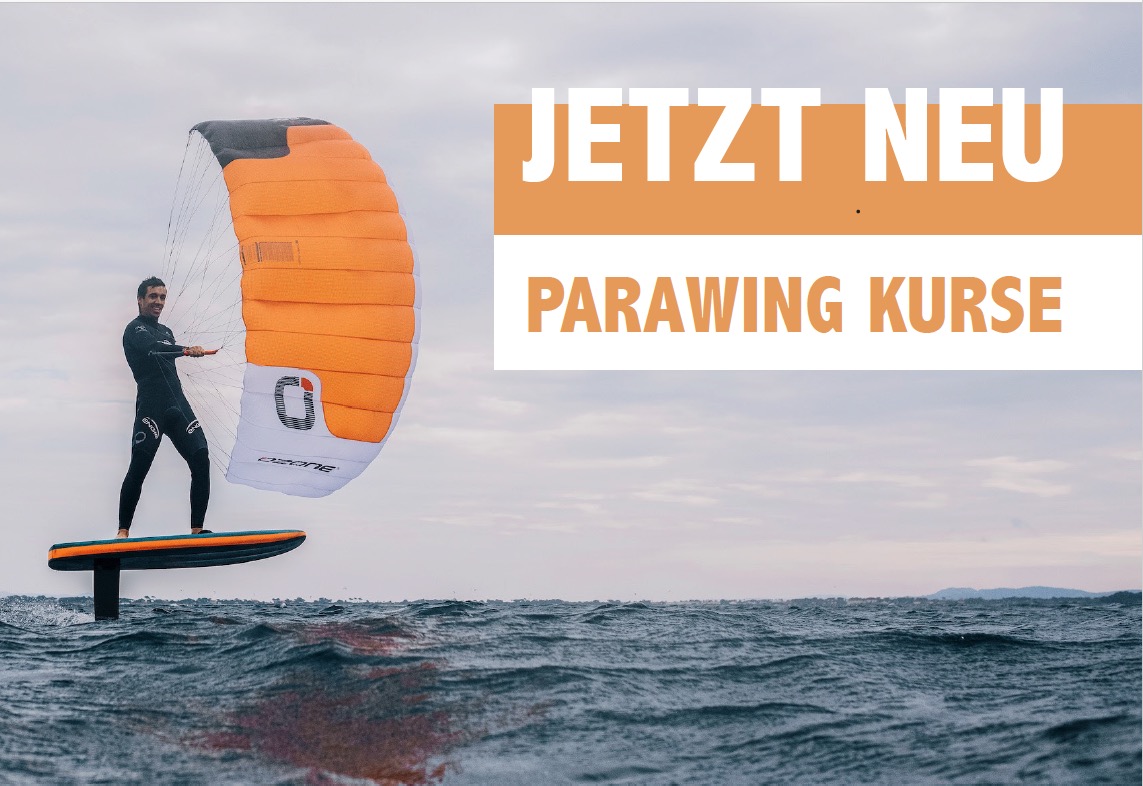
A new term has just emerged on the scene that is causing a lot of discussion: Para-Wing. If you've been to the spot in the last few weeks, you may have seen someone gliding across the water with an ultra-light, fluttery kite - without a tube, without any visible structure. We've taken a look at this trend for you and can tell you for sure: Exciting, yes - but not for beginners. Or as the title says: „New trend but a false start for beginners!
What is a para-wing anyway?
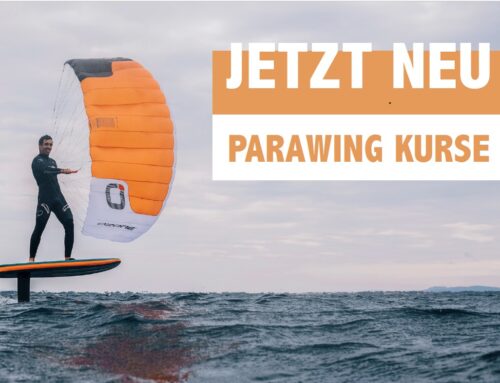
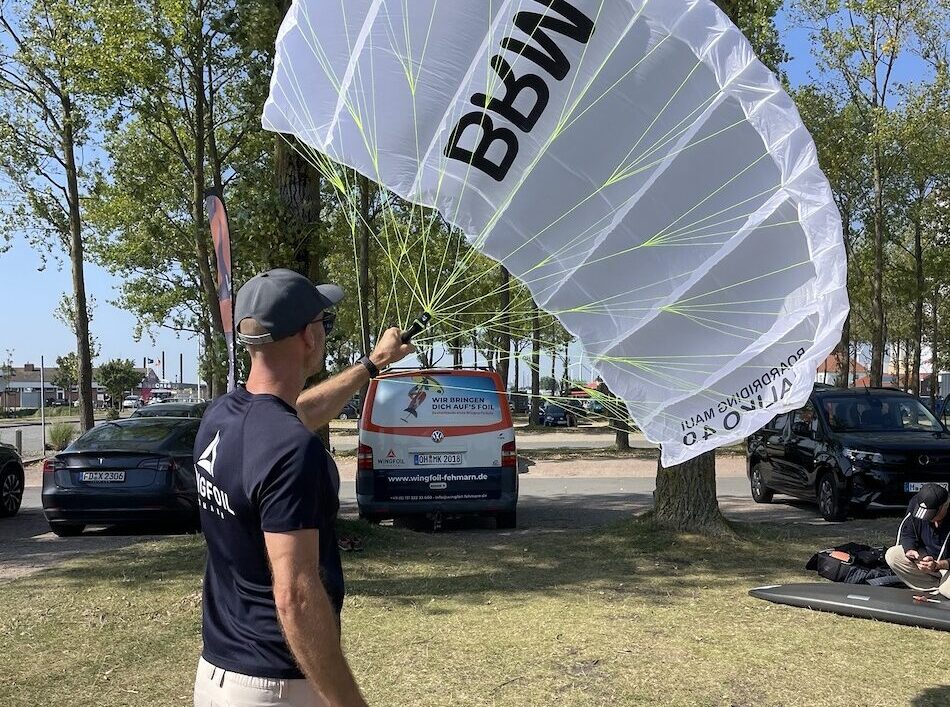
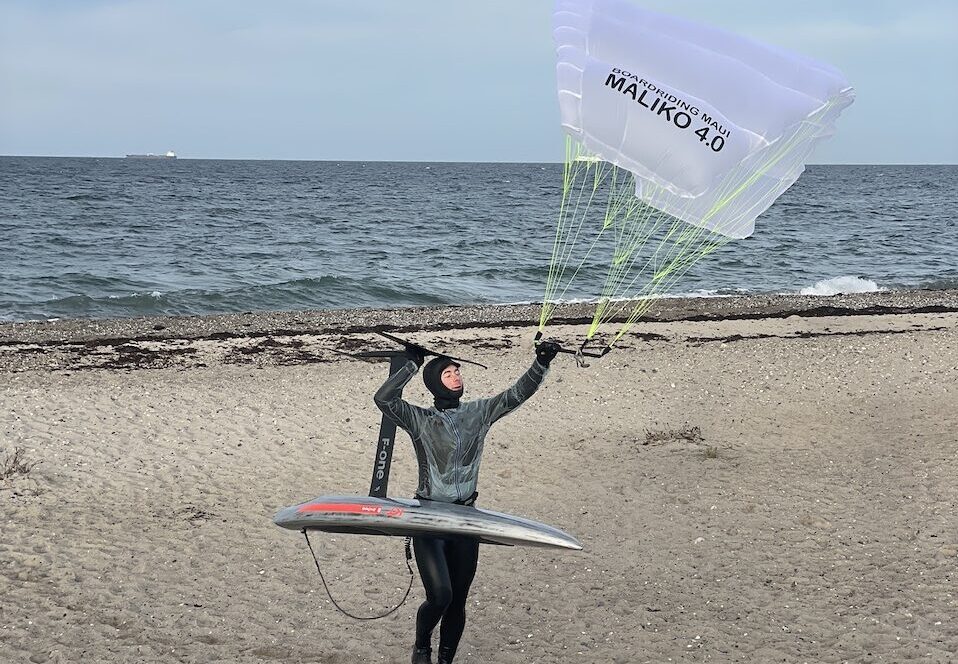
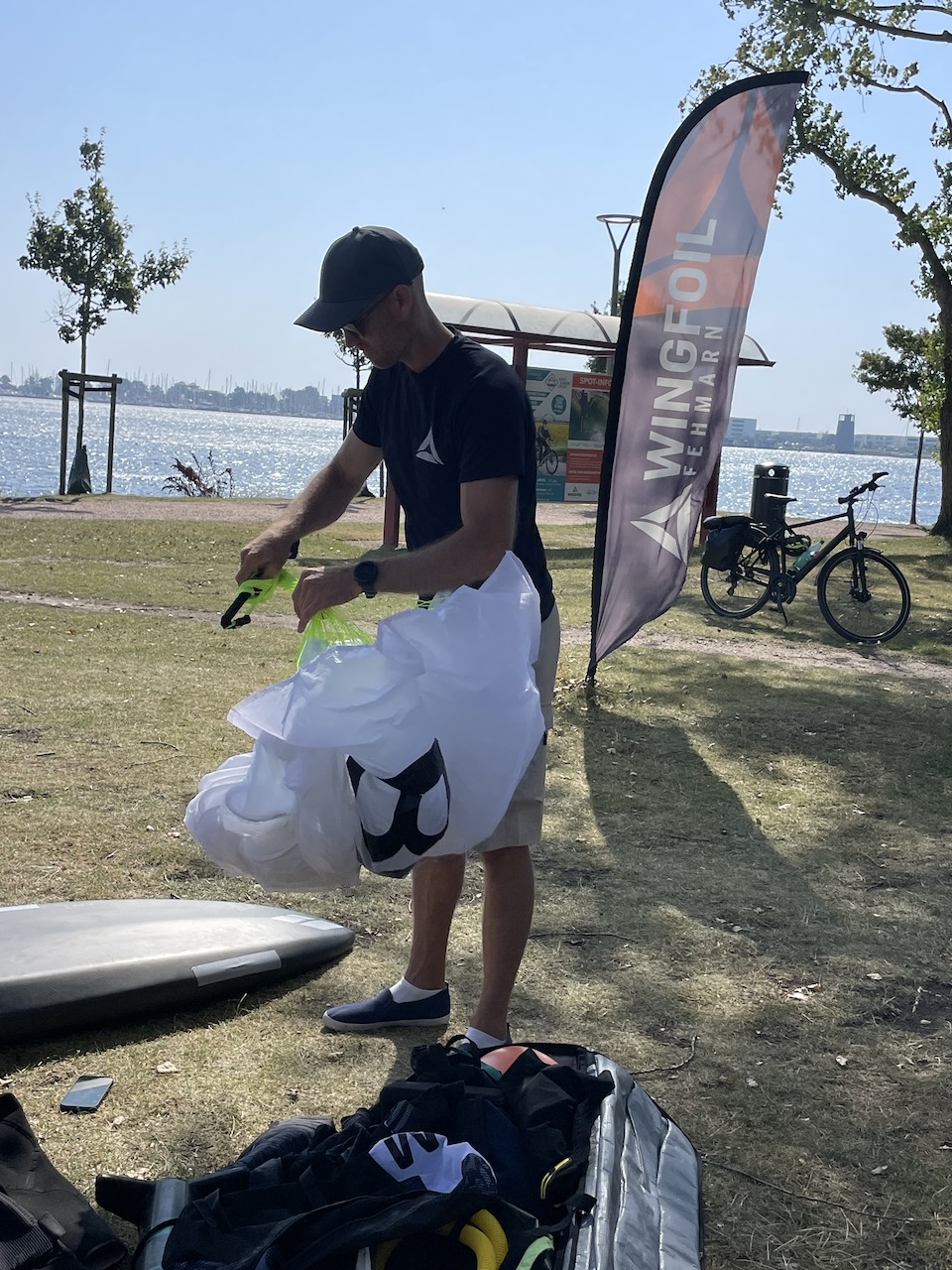
Unlike the classic wing that we know from wingfoiling - with a thick, inflatable front tube and stiff handles - the para-wing is a completely different concept. Technically speaking, it is actually a kite with very short lines - often with a span of less than two metres. The wing has no inflatable elements, but is made entirely of cloth, similar to a paraglider or soft kite. It is controlled directly via a small bar, which makes it look closer to a classic kite than its appearance would suggest.
The idea behind it: an ultra-light setup with as little drag as possible and maximum compactness. And that's exactly where the biggest attraction lies: THE solution for downwind foilers! Now you can save yourself the process of learning to paddle!... but not quite!
.
The advantages - why para-wings can be really cool
Let's take a moment to recognise what the Para-Wing does really well. The thing is damn small. Whereas with a normal wing you have to handle the pump, hoses and tube, you simply pull the Para-Wing out of your rucksack - or even better: conjured out from under the Lycra in three seconds. For minimalists, this is a dream.
In addition, the Para-Wing weighs almost nothing. Anyone who likes to walk to the spot or is travelling light will quickly appreciate this advantage.
What's more, the handling in flight feels much closer to kitesurfing or paragliding - this may be a bonus for some, especially for people with the relevant previous experience.
.
But now comes the reality - and unfortunately it's tough for beginners
As fascinating as the concept is, we also have to slow you down a little. Because: Para-wings are completely unsuitable for beginners. Why? Quite simply:
1. no structure, no support:
A classic wing has a thick, inflatable front tube that gives the whole system stability. You can lean on it, get clear feedback and have a defined shape that you can work with. With the Para-Wing, this is completely missing. The part is constantly in motion, sometimes collapses in gusts and requires a lot of dexterity.
2. very inefficient:
The difference is particularly noticeable when planing or pumping: the structure of a normal wing gets you onto the foil quickly. The para-wing, on the other hand, is soft, unstable and needs constant input - no chance to rest or build up power through pumping movements.
3. no buoyancy in the water:
If you fall into the water with a classic wing, you can lean on it, it stays afloat and you have a kind of safety island. A para-wing sinks like a wet rag. For beginners who fall into the water more often, this is a real safety issue.
4. material not yet fully developed:
Most para-wings are prototypes or first series. There is still a lot of trial and error - which is cool for people who like to tinker and test. But for beginners, that means hardly any standards, little reliability - and a blatant loss of value.
Conclusion from the perspective of our school
We love new ideas. And we celebrate it when material evolves, boundaries are broken and new paths are thought up.
Our company is just as innovative with innovative training methods. The Para-Wing is just such a concept - and yes, For advanced users with an understanding of technique and a certain play instinct, this can be really fun.
But we wouldn't be honest if we said it was for beginners. On the contrary: if you're just getting into wingfoiling, you need one thing above all else - the right skills. Control, stability and a reliable setup. A classic wing with tube offers exactly that. It is robust, easy to launch, forgives mistakes and always gives you good feedback.
That's why we say quite clearly: Para-wing is exciting - but only once you've mastered your foil and know what you're getting into.
And one last point: anyone who thinks they can save money with a Para-Wing should be aware - the material is not (yet) cheaper, but simply less durable, experimental and associated with a high loss of value.
.
Our tip:
Gain your first experience with a classic wing. Once you can fly safely, are regularly on the foil and are keen to take on new challenges - then you can plunge into the world of para-wings. But until then, stick with what works. And we'll help you do it.